euractiv.de
 euractiv.fr
 euractiv.es
 euractiv.it
 euractiv.pl
 euractiv.cz
 euractiv.gr
 euractiv.ro
 euractiv.sk


Produced with financial support from an organization or individual, yet not approved by the underwriter before or after publication.
This article is part of our special report Reclaiming Europe’s promise with smarter governance and less bureaucracy.
While Europe’s startup ecosystem has matured over the past decade, a fragmented landscape of business advocacy risks leaving its most innovative voices without meaningful influence in Brussels.
As regulatory burdens rise and the European Union pledges to become “the best place for start-ups”, Europe’s entrepreneurs warn that excessive red tape is thriving, partly because their interests are poorly represented at the policymaking table.
Empowering startups
A recent report from StepUp Startups, “Beyond Fragmentation: Connecting Europe’s Startup Ecosystems for Growth and Innovation”, identifies one of the core problems: Europe’s startup potential is being stifled by political and institutional silos.
Founders often face conflicting rules, uneven access to funding, and systemic barriers to scaling across borders.
And while large corporations benefit from well-established lobbying structures and deep legal benches, startups must navigate EU bureaucracy with limited time, capacity and influence.
The report argues for a radical rethink: rather than trying to mirror corporate-style associations, startup ecosystems should be empowered through targeted, cross-border frameworks.
These include a proposed Startup Talent Visa, a harmonised set of tax and regulatory standards, and an EU-wide platform to connect founders with funding, infrastructure and legal support.
Crucially, it highlights the absence of a unified, coordinated voice able to defend startup interests at scale.
Startups need a voice
This fragmentation is not lost on those working at the grassroots.
Peter Kofler, Chairman of Danish Entrepreneurs, says structural misalignment is weakening the business voice in Brussels – especially for fast-growing, innovation-driven firms.
“Most large business organisations derive their funding and political influence from incumbent companies – firms that have long since stopped innovating and are often more concerned with preserving the status quo than transforming it,” Kofler told Euractiv.
“These are companies that benefit from the complexity of current regulation because it creates high barriers to entry.”
According to Kofler, startups cannot afford to spend time negotiating abstract policy positions or adapting to a system designed for traditional industry players.
“Startups exist to disrupt. Their success depends on speed, boldness, and the ability to challenge traditional thinking. They cannot afford to waste time negotiating whether to use one word or another in a white paper to the Commission,” he said.
“Instead of broad, consensus-driven assemblies, we need mechanisms that bring founders directly to the table – into the rooms where real decisions are made.”
A little less conversation, a little more action
That frustration is echoed by Tobias Gotthardt, State Secretary of Economy in the Bavarian Federal Government. He warns that efforts to unify advocacy structures often end up as window dressing, failing to address the real obstacles startups face.
“Europe’s economic landscape is remarkably diverse – and that diversity is one of our greatest strengths. But it also makes it harder for businesses to form a unified front against excessive bureaucracy,” Gotthardt told Euractiv.
“What all sectors should try to agree on is the intense and common call for a radical mind change at the European level. The three and only most important goals for Brussels’ agenda have to be: competitiveness, competitiveness, and competitiveness.”
Gotthardt is sceptical of calls to create yet another cross-sectoral body for business representation. In his view, more important than new platforms is the political will to act.
“We need a new mindset, not new task forces. I would not support a permanent, cross-sectoral European Business Assembly,” he said. “Europe needs Brussels as a real and honest makerspace: more ‘tschakka’, less ‘blabla’!”
A seat at the table
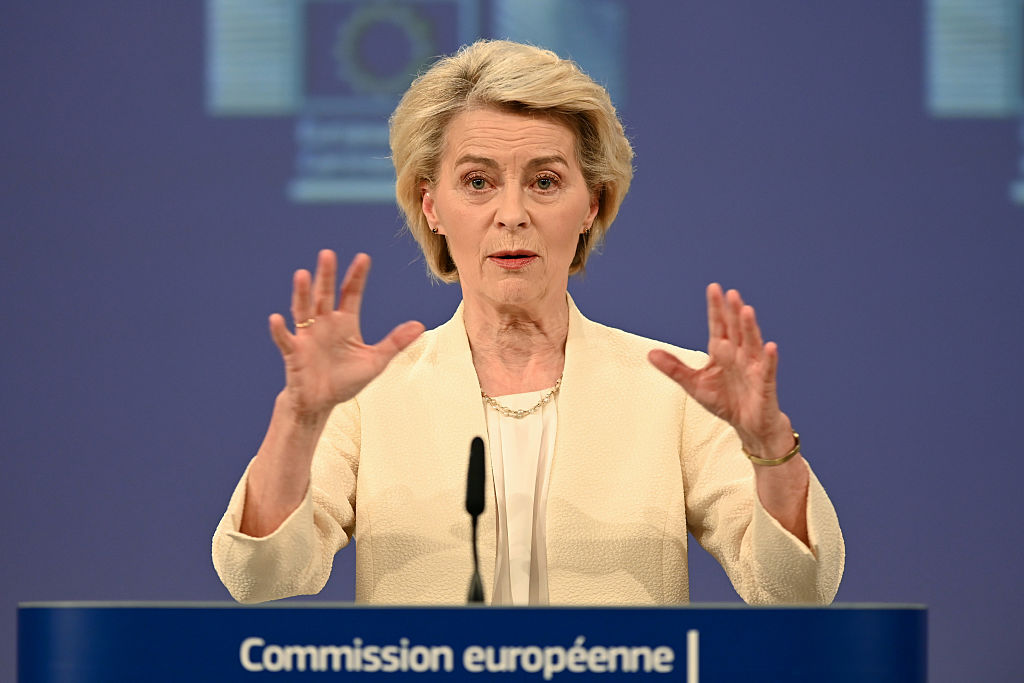
These concerns come at a moment when the Commission is pitching its new startup strategy as a breakthrough in removing red tape and supporting growth.
But without effective channels to bring startup voices into EU policymaking, many fear the strategy could become yet another layer of initiatives without real leverage.
As the StepUp Startups report points out, fragmentation itself is not fatal – but inaction is. Europe’s startups are not short on ideas or ambition.
What they lack is a seat at the table and a system willing to adapt to their speed, scale and structure.
If Brussels is serious about building the next generation of European unicorns, it must stop treating startups as a niche interest and start integrating them into the core of its economic policymaking.
Otherwise, bureaucracy – and not innovation – will continue to set the rules of the game.
[Edited By Brian Maguire | Euractiv's Advocacy Lab ]