euractiv.de
 euractiv.fr
 euractiv.es
 euractiv.it
 euractiv.pl
 euractiv.cz
 euractiv.gr
 euractiv.ro
 euractiv.sk

Based on facts, either observed and verified directly by the reporter, or reported and verified from knowledgeable sources.
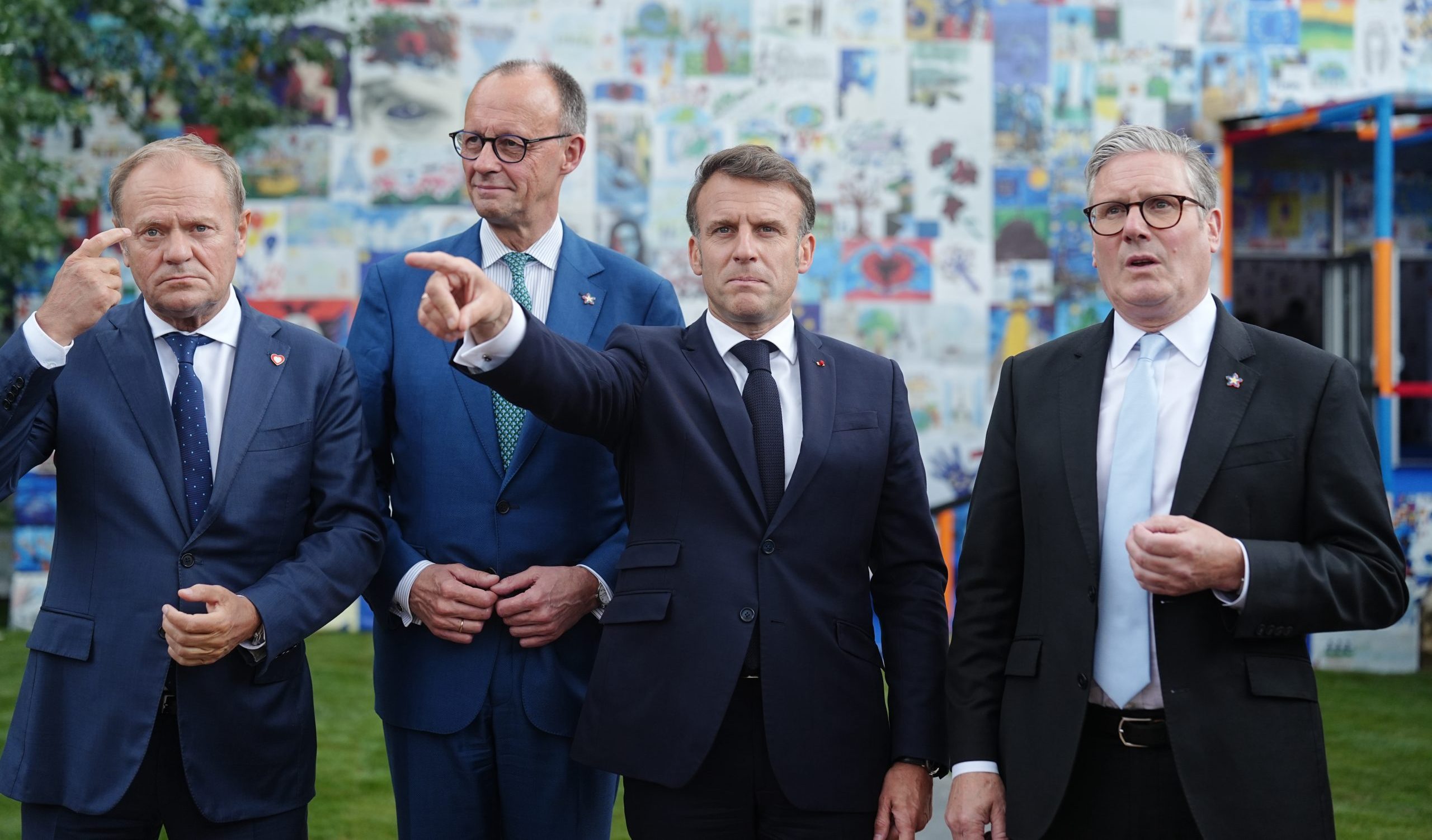
German Chancellor Friedrich Merz and Prime Minister Keir Starmer signed a landmark friendship treaty on Thursday, which will see the two countries collaborate more closely on security matters, including on nuclear deterrence.
The signing in London crowns a diplomatic effort that began last summer when Starmer and Merz's predecessor, Olaf Scholz, announced that they would seek to sign the countries' first-ever bilateral friendship treaty.
The endeavour, which they said would cover the "full bandwidth of the relationship" has been compared to the wide-ranging Treaty of Aachen, the friendship treaty signed by Germany and France in 2019.
The final text – dubbed the Kensington Treaty – puts security at the heart of the relationship, building on last year's Trinity House Agreement.
Both the UK and European countries have sought closer cooperation after Brexit and in the face of America's potential withdrawal from Europe's security architecture. Starmer told journalists in the afternoon that the UK and Germany had done "something genuinely unprecedented" in signing the treaty.
Among the most eye-catching provisions is the pledge that both Berlin and London would "pursue deep exchanges" and "a close dialogue" on defence and strategic security policy, including on "nuclear issues" and "nuclear threats."
The vow aligns with Merz's push to discuss the extension of the Franco-British nuclear deterrence to the rest of Europe, which remains controversial in pacifist-leaning Germany.
Merz and French President Emmanuel Macron said in May that they would create a high-level Franco-German security council, where such topics would be discussed.
The German-British treaty also establishes annual strategic dialogues to be held between the countries' foreign ministers and senior officials to discuss security issues.
Moreover, it includes a mutual assistance clause, which will "complement and strengthen" the mutual assistance clauses established by existing bilateral treaties between Germany, Britain, and France, and NATO, a German government source stated on Monday.
During the press point on Thursday, Starmer also called the two countries the "leading NATO powers in Europe."
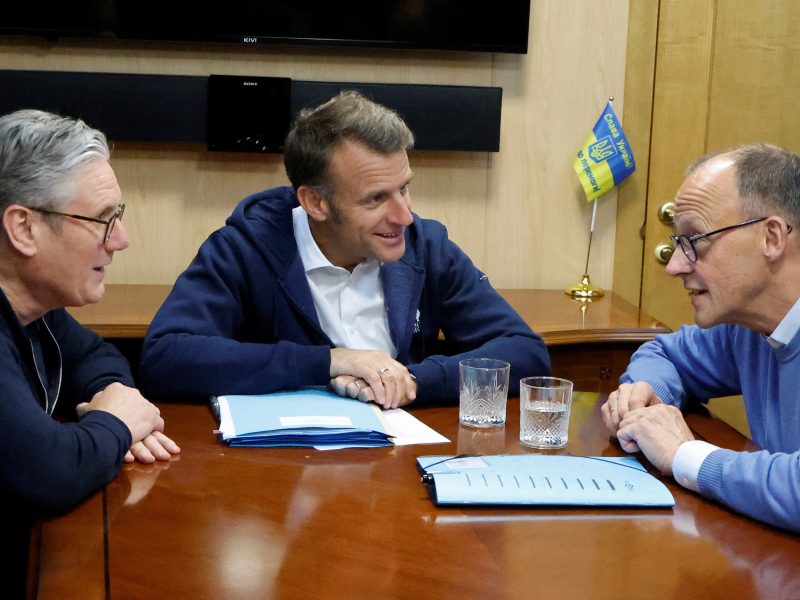
The new treaty will complete the triangle of large-scale treaties between the three countries, which are also known as the E3. The latest bilateral visits between the countries' leaders "show that we as the E3 (...) are moving closer together in terms of security policy, migration policy, but also economic policy," Merz told journalists.
A senior EU diplomat said the point of such agreements and formats was "to strengthen the individual threads within the web of European relations," some of which had been severed by the UK's exit from the EU.
What else is inside
Aside from security, the countries also commit to cooperating on fighting migrant smuggling, on limiting the increase of global average temperature to 1.5°C above pre-industrial levels, and on youth exchanges.The British government had been particularly keen for the treaty to reflect its focus on growth and trade, as a UK government source told Euractiv, although the treaty was somewhat limited by EU competences in this area.
The treaty's future had been intermittently in limbo, however, after the collapse of Germany's government last year, prompting negotiations to be halted.
Talks resumed after Merz's inauguration with a review of the existing text and some "resharpening," especially on security, the government source said. Both sides were closing in on a signing just one month into Merz's term, as was first reported by Euractiv.
The text still has to be ratified by the German Bundestag.
UPDATED: The article has been updated with quotes from Merz's and Starmer's joint press point.
(mm)