euractiv.de
 euractiv.fr
 euractiv.es
 euractiv.it
 euractiv.pl
 euractiv.cz
 euractiv.gr
 euractiv.ro
 euractiv.sk


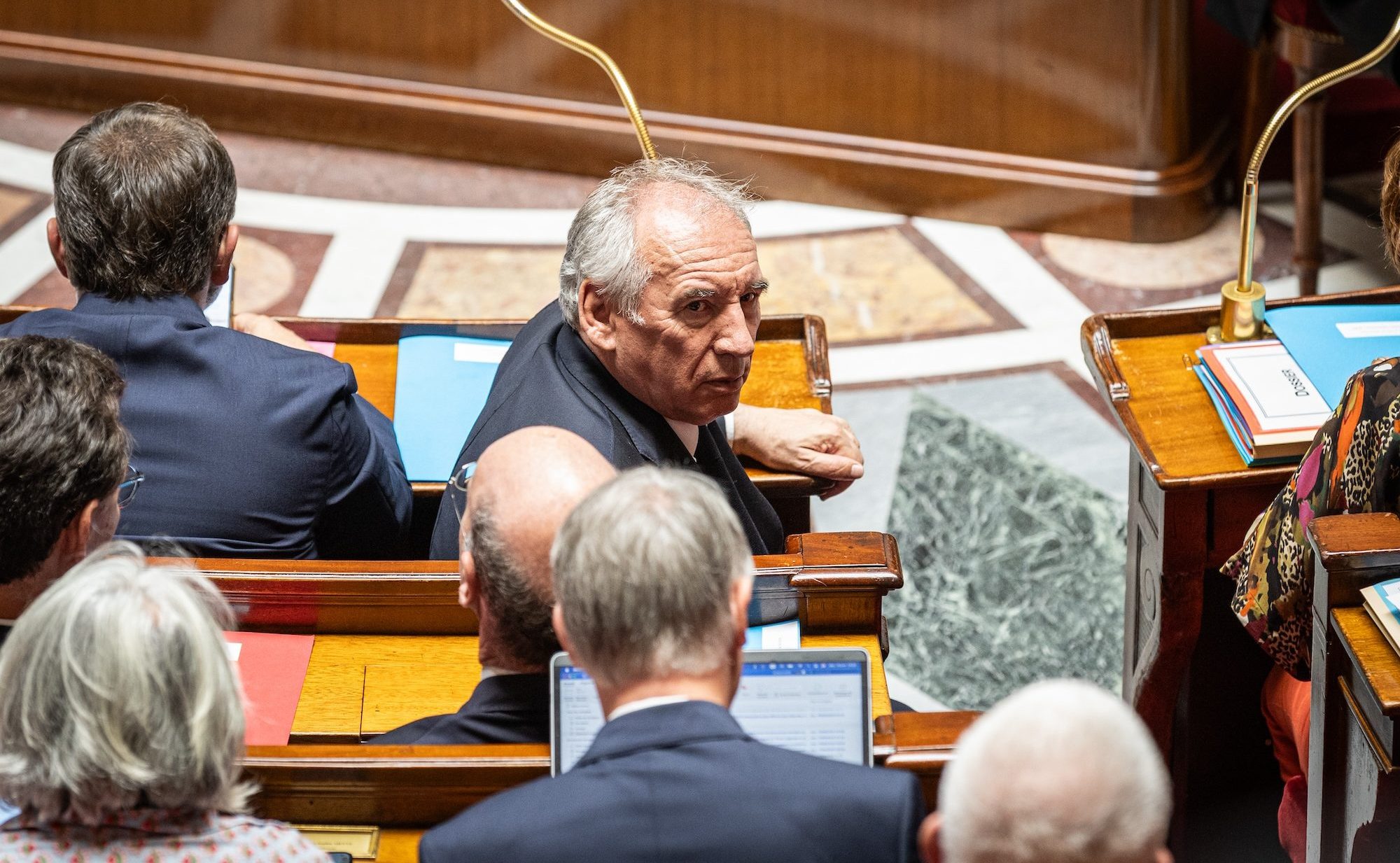
A majority of deputies in the French National Assembly voted shortly after 8:00pm on Wednesday (4 December) to pass a motion of no confidence against Prime Minister Michel Barnier's government, triggering the most significant political crisis of the Fifth Republic.
Following an electrifying day in the National Assembly and after weeks of uncertainty, the vote topples Barnier's government after just 90 days in office. Last-minute calls for "responsibility" from President Emmanuel Macron and Barnier himself failed to sway a sufficient number of deputies.
331 out of 577 members of the National Assembly voted in favour of the motion of no confidence, tabled by the left-wing forces united under the New Popular Front (NFP). Their motion was supported by far-right deputies from the National Rally (RN) and their allies.
Barnier must now submit his resignation to Macron. His government can remain in post in a caretaker capacity until Macron appoints a new prime minister.
"Your failure was inevitable, and it was crushing. This motion of no confidence will bring you down," Eric Coquerel, a deputy from La France Insoumise (LFI), told Barnier before the vote. He claimed that "the majority [of the French people] supports neither your government nor the president who appointed you to this position."
"You eventually tried to make compromises, but with the far right – the National Rally, which you favoured in violation of the republican barrier that the majority [of voters] expressed during the [July] legislative elections," Coquerel further declared.
Renowned for his diplomatic skills, Barnier had worked since his appointment on 5 September to open dialogue with the far-right party, whose neutrality was crucial to his tenure at the helm of the government.
However, Barnier's concessions granted to the RN, on migration issues and the 2025 budget proposal, proved insufficient to persuade the RN's leader in the Assembly, Marine Le Pen, to spare him.
"We wanted to believe you were aware of the country’s suffering, capable of understanding the new political balances," explained Le Pen. "But you only provided one answer: taxes, taxes, and more taxes."
"The time is approaching for a great change, this great change we so fervently desire, which will bring deliverance to all French people," she added.
Only once before in the history of the Fifth Republic has a motion of no confidence succeeded: on 4 October 1962, leading to the resignation of Georges Pompidou's government. That event, however, was immediately followed by the dissolution of the National Assembly. Now, Macron must wait until July 2025 to call new legislative elections.
Michel Barnier had resorted to Article 49.3 of the Constitution on Monday (2 December) to pass the 2025 Social Security Financing Bill (PLFSS) without a vote, paving the way for two motions of no confidence to be submitted.
[Edited by Owen Morgan]
Updated: 05-12-2024