euractiv.de
 euractiv.fr
 euractiv.es
 euractiv.it
 euractiv.pl
 euractiv.cz
 euractiv.gr
 euractiv.ro
 euractiv.sk


Based on facts, either observed and verified directly by the reporter, or reported and verified from knowledgeable sources.
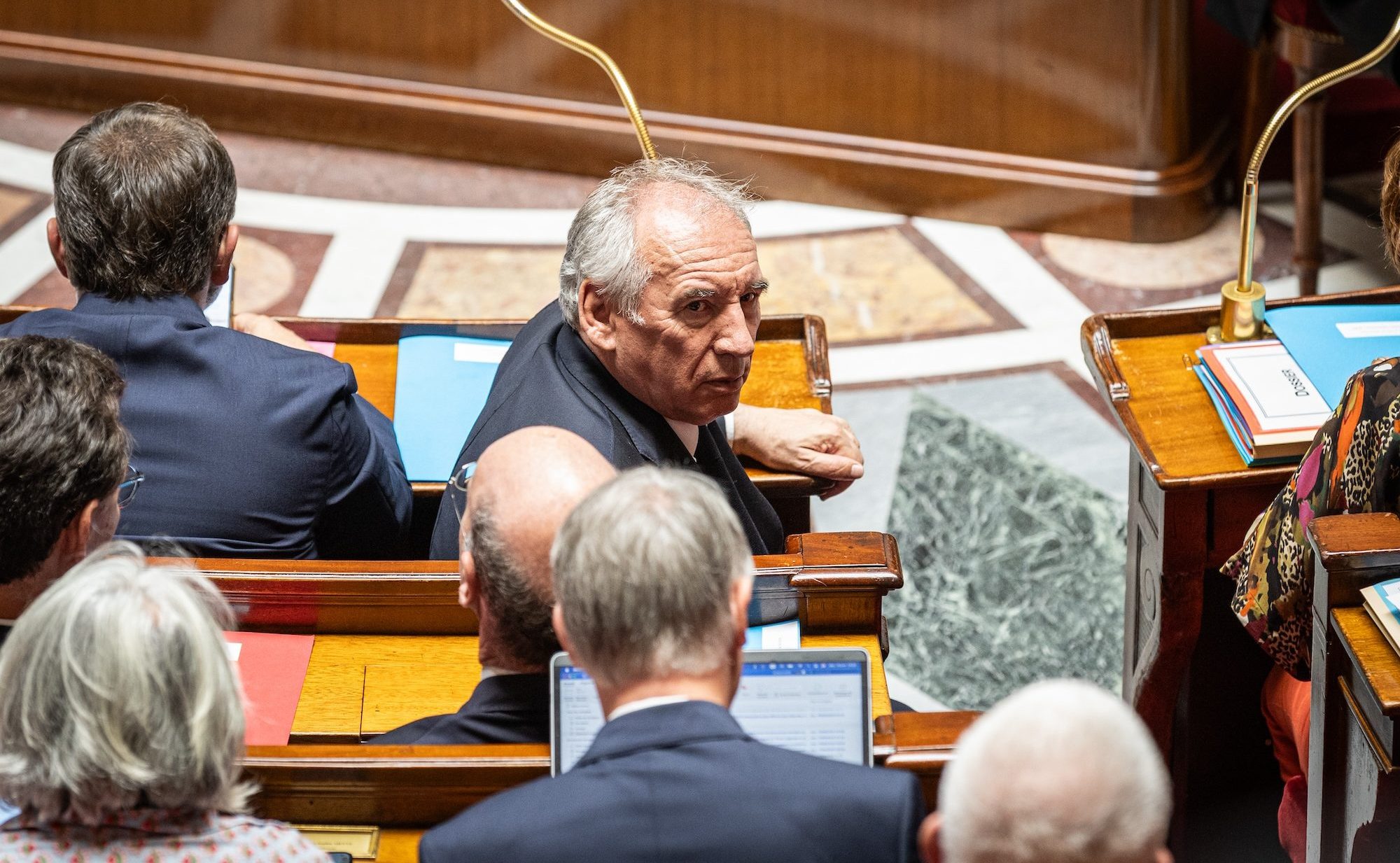
PARIS – The €40 billion austerity plan for 2026 that French Prime Minister François Bayrou will unveil on Tuesday is expected to be rejected by all opposition parties. This could lead to the fall of the government when parliament votes on the proposal in autumn.
At 16:00 on Tuesday, Bayrou will present his first budgetary orientations for 2026. For weeks, government ministers have taken turns to face media and prepare expectations, emphasising the catastrophic state of public finances and the urgent need to rein in public spending.
According to figures released by the National Institute of Statistics and Economic Studies (INSEE) on 26 June, public debt rose by a further €40.5 billion in the first three months of the year, reaching €3,345.8 billion at the end of the first quarter – equivalent to 114% of gross domestic product (GDP).
To reduce the deficit from 5.4% of GDP this year to 4.6% next year – and to fall within the European 3% limit by 2029 – the Prime Minister intends to propose a €40 billion adjustment to the 2026 budget. Stressing this will come without any “indiscriminate tax hikes”, the move will necessarily entail a reduction in public spending.
Measures under consideration include reforms to unemployment insurance and a reduction in ministerial budgets across the board. At the same time, increased defence spending has already been announced, the cost of servicing debt will go up, and France’s contribution to the European Union (EU) budget will also grow.
The government is also said to be counting on a “freeze year”, which would see social benefits – including unemployment insurance and pensions – maintained at 2025 levels, despite an expected inflation of 1.6% in 2026. This freeze could save around €5 billion.
In an effort to win support, the Prime Minister met last week with representatives of the various political groups in the National Assembly. But he knows he is walking a tightrope. Whilst the scale of financial challenge is almost universally acknowledged, there is no consensus on how to address it.
A trench war in the making
The supply-side economic approach championed by Bayrou – and by all of Emmanuel Macron’s prime ministers before him – is denounced by the left-wing parties, who criticise the tax breaks granted to businesses.
“Since 2017, public spending has fallen relative to GDP, so it’s not spending that has made the deficit worse – it’s the tax cuts,” MP Éric Coquerel (LFI), who chairs the National Assembly’s Finance Committee, told Euractiv.
“The trade war launched by Donald Trump calls instead for massive investment in industry, as the Germans are preparing to do,” Coquerel added. He fears a “decoupling” of the French economy and an “explosion” in inequality.
LFI is expected to reject the proposed budget this autumn, which will leave the government no choice but to try, once more, to negotiate with the Socialists. The latter had agreed not to vote down the 2025 budget in exchange for reopening the file on pension reform.
But the failed negotiations between trade unions and employers have put Bayrou's government on thin ice and the Socialists now plan a more combative stance towards the government’s proposals. Socialist senator Patrick Kanner has pushed for a greater tax burden on higher-income individuals: “If the effort demanded of the wealthiest is just a minor tax raising €1 to €1.5 billion, that won’t be acceptable,” he warned.
The far-right Rassemblement National (RN) has criticised the lack of “structural savings”. “Proposing a ‘freeze year’ is like saying ‘I’m doing nothing, but it’s less bad than doing something’,” RN MP Philippe Lottiaux told Euractiv.
RN favours “reducing the cost of immigration” by tying social benefits to “nationality and employment criteria”. Alongside this, the party calls to renegotiate France’s contribution to the EU budget, due to rise from €23.8 billion in 2025 to €29.2 billion in 2026.
Bayrou on borrowed time
RN has warned that it will not hesitate to bring down the government this autumn if it insists on pushing through a budget that “undermines the purchasing power of the French people”. As with the toppling of the Michel Barnier government last December, the far-right could be joined by all left-wing parties.
“The budgetary situation is concerning, but political instability is even more so, as it prevents any long-term planning of savings measures,” Mathieu Plane, Deputy Director of the French Economic Observatory (OFCE), told Euractiv. This is a particular concern as a long-term budget course is crucial to retain market confidence, he added.
On 4 July, the yield on five-year Italian government bonds (BTPs) fell below that of French bonds (OATs), at 2.65% versus 2.67%, respectively. By contrast, experts observe the political stability in Italy, which boosts its credit rating.
Updated: 15-07-2025