euractiv.de
 euractiv.fr
 euractiv.es
 euractiv.it
 euractiv.pl
 euractiv.cz
 euractiv.gr
 euractiv.ro
 euractiv.sk

Based on facts, either observed and verified directly by the reporter, or reported and verified from knowledgeable sources.
While the European Commission has proposed a substantial increase in the size of the bloc's central budget from 2028, green groups have accused the EU executive of lowering the priority of environmental action and warn civil society voices could be excluded from the policy making process.
As expected, the European Commission has proposed axing the LIFE Programme, the EU's only stand-alone funding mechanism for environmental action. The 2028-34 budget bill also squeezes broader funding for climate and biodiversity policy goals.
But the EU executive put a positive spin on its move to streamline green funding with the massively increased €2 trillion budget.
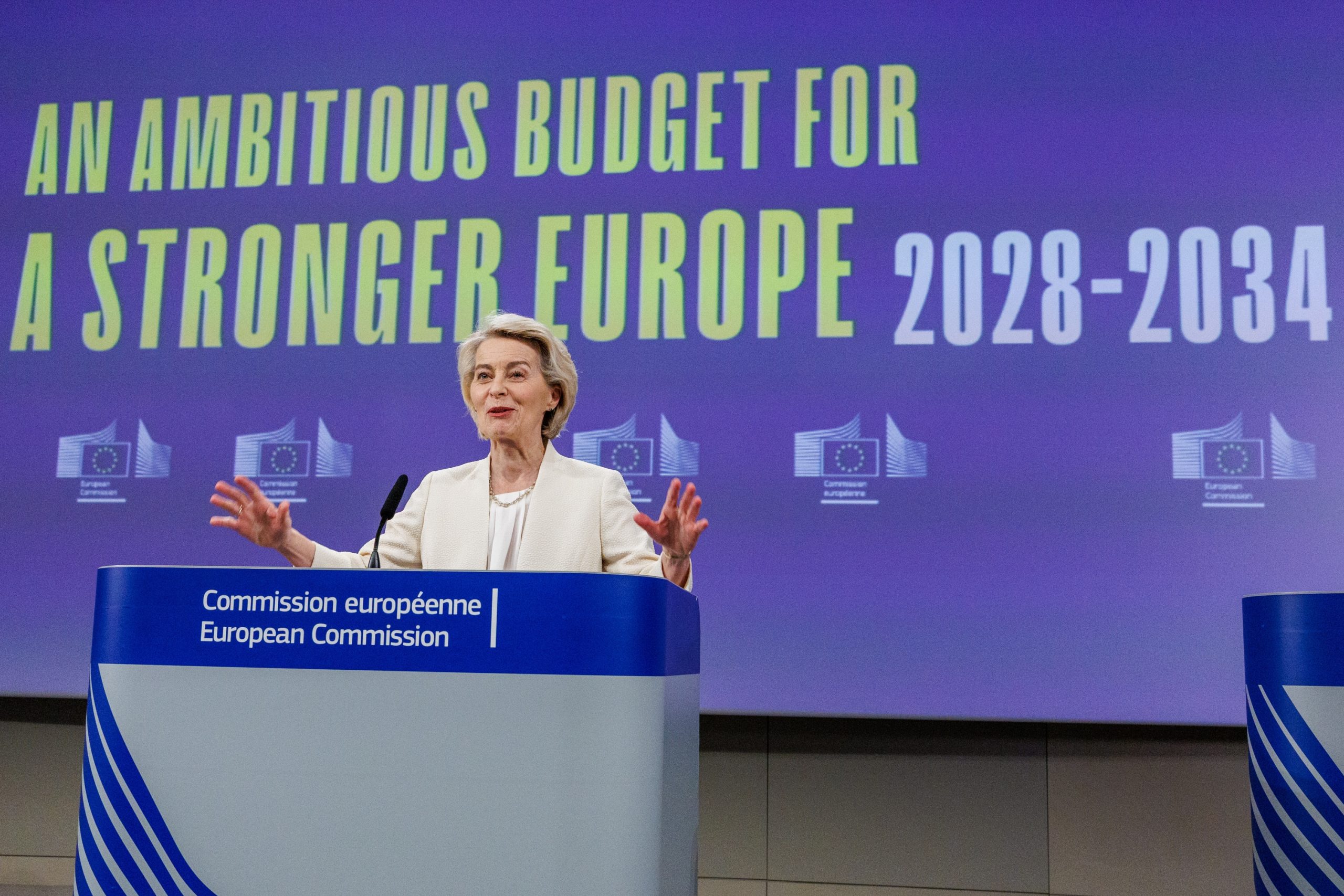
“We will have a climate and biodiversity spending target, so mainstreaming, of 35% for the new MFF," European Commission President Ursula von der Leyen told reporters on Wednesday, referring to the EU's next multiannual financial framework. "This amounts to around €700 billion.”
This substantial sum of money would have to be spent in ways that are compatible with the EU goal of reaching net-zero emissions by mid-century, and reversing biodiversity loss. Nevertheless, it is lower than the combined €658 billion ring-fenced for climate and €113 billion for biodiversity in the current budget.
From 2028, central budget funding for climate and environment purposes will be split in two separate pillars: the ‘clean transition and industrial decarbonisation’ envelope of the €410 billion European Competitiveness Fund (ECF), and some €1 trillion spread across different priorities such as economy, agriculture, rural prosperity and security.
“Our proposal for the next MFF shows that we remain strongly committed to environmental priorities," Environment Commissioner Jessika Roswall said. "Water, circularity, nature and bioeconomy are prominent parts of the new competitiveness fund and the national plans."
Less money for nature
However some fear this new approach risks decreasing overall funding for nature and biodiversity.“The loss of LIFE as we know it in the new MFF is not simplification – it’s sabotage," said Patrick ten Brink, secretary general of the European Environmental Bureau (EEB), an NGO umbrella group. "The LIFE Programme exists for a reason. It delivers targeted, cost-effective results for nature, climate and public health.”
Ester Asin, director of the WWF European Policy Office warned the 35% global target could become little more than a PR exercise.
"By grouping all environmental spending under a single target, there is a real danger that biodiversity will be sidelined in favour of industrial priorities that may be presented as green investments," she said.
Others warned the proposed budget reform could actually widen a gap in funding for nature restoration that is currently estimated to be €19 billion annually.
“We are deeply concerned by the lack of dedicated biodiversity funding, as the LIFE funding is now suggested to be merged with other programmes," said Andras Krolopp, biodiversity policy lead at The Nature Conservancy.
The concerns of civil society groups were also echoed by progressive voices in the European Parliament.
“It is irresponsible and short-sighted for this proposal to end the LIFE programme and leave out funding for biodiversity,” said Green MEP Rasmus Nordqvist, one of the negotiators of the MFF in the Parliament’s budget committee.
The cancellation of the LIFE Programme also represents an existential threat to numerous environmental NGOs who currently share €15 million in direct grants to cover part of their operational expenses.
The Commission says such support could in future be disbursed via national programmes, but it is unclear for now how the funds would be allocated, and whether campaign groups will be able to meet unspecified criteria related to competitiveness or national policy objectives.
“[By] repealing LIFE, core funding for environmental NGOs could disappear, leaving civil society under-resourced to support necessary implementation, enforcement, and public engagement," the EEB warned.
“The MFF needs to enable civil society actors to participate effectively in EU-level policymaking," MEP Nordqvist said. "It is essential to safeguard the right of everyone to meaningful participation in decision-making processes and the full cycle of implementation of the EU budget."
(rh, aw)