euractiv.de
 euractiv.fr
 euractiv.es
 euractiv.it
 euractiv.pl
 euractiv.cz
 euractiv.gr
 euractiv.ro
 euractiv.sk


Advocates for ideas and draws conclusions based on the author/producer’s interpretation of facts and data.
Good Friday afternoon, welcome back to GBU.
This Strasbourg week saw von der Leyen face the ire of MEPs, as a motion of censure offered the chance to air multifarious grievances against the Commission president. The vote itself didn't present an existential threat to the executive, as disunity among the plaintiffs made it almost inconceivable that the two-thirds majority would be reached.
But the debate three days before was entertaining nonetheless, as centrist parties upbraided the EPP for its dealings with far-right groups. And after railing against the European People's Party's "irresponsible" tactics to sideline old allies through dealings with the European Conservatives and Reformists, the Socialists landed a victory as von der Leyen promised to keep €150 billion social spending in the next budget.
Tariffs incoming
The spectacle of von der Leyen's dressing down didn't distract from the more ominous prospect of US tariffs, which had been scheduled to drop 9 July until that deadline was pushed back to 1 August – probably, as Treasury Secretary Scott Bessent was unable to firm up on details.
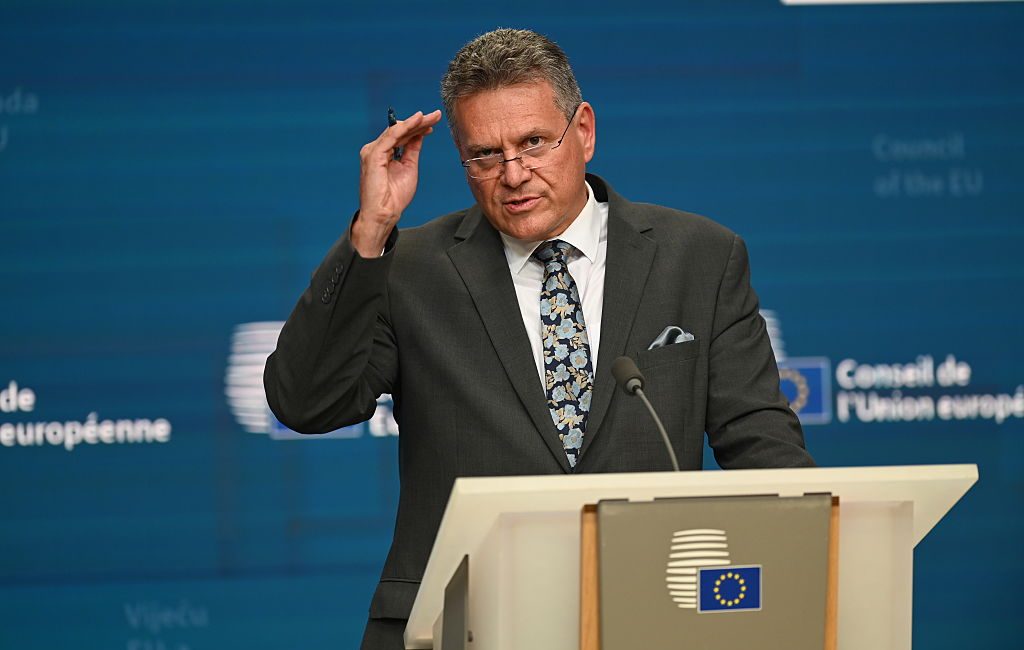
The bloc's point man on trade, Maroš Šefčovič, had been on numerous missions to Washington, in a bid to avoid a baseline duty of 50% on EU exports. But with the trade commissioner's efforts so far unfruitful, hopes for an agreeable deal sank throughout the week.
Fears for the worst started on Monday, as South Korea and Japan were handed a 25% blanket levy, despite Japanese negotiators having been seven times to Washington since April. Optimism faded further as Canada was served a fat 35% – and was cautioned not to retaliate.
Addressing MEPs on Wednesday, Šefčovič was fatalistic, only able to give assurances he would continue pushing for the best deal for Europe (ie. keep doing his job). The best-case scenario now seems a 10% deal, similar that secured by the UK, and which EU ministers had scoffed at when (some) time was still on our side.
At time of writing we are still waiting for Trump's letter. The Commission told journalists on midday Friday that "we’ve grown used to things happening very quickly, or not". And so we wait.
Schengen falters
The freedom of movement that goods and citizens enjoy thanks to the Schengen treaty is being unpicked, as various signatory nations impose border controls to stem the flow of refugees and migrants.
The Oder–Neisse line between Germany and Poland has become the most vigorously guarded border, as both countries enforce checks on vehicles, sparking delays and incurring costs to businesses. The issue has stoked anti-German sentiment in Poland, with far-right activists carrying out their own patrols to apprehend migrants.
Besides the annoyance for those crossing these borders, the economic repercussions are substantial, potentially impacting some 32 million businesses with additional bureaucratic costs.
Has Germany's great conservative hope had his day?
Jens Spahn was once considered a chancellor-in-waiting. But the leader of the parliamentary faction of Merz' CDU party has been tarnished by a scandal dating to his days as health minister during the pandemic.
Spahn had overseen procurement contracts for masks, but a recent report by Germany's National Court of Auditors found that the protective supplies – that cost the country some €6 billion – were largely faulty. Over half were eventually destroyed.
Whilst Merz has so far stood by his parliamentary chief (he wasn't in government at the time of the deals), the backlash is damaging for the chancellor's party.
Mediterranean migration crackdown
Greece is devising new ways to deter migrants, as boats from Libya have already brought around 10,000 to the island of Crete this year. Deeming the current conditions in migrant camps too comfortable – "hotel-style", in the words of the migration minister – one strategy is to provide less appealing meals.
Already, asylum requests for people arriving from North Africa have been suspended for at least three months. But the success of such measures will be undermined by deteriorating relations between the EU and Libya, as was highlighted when on Wednesday the EU Migration Commissioner Magnus Brunner was ejected from eastern Libya.
The situation is further complicated by a bilateral agreement between Turkey and the Tripoli government to establish exclusive economic zones close to Crete – an agreement condemned by the EU as illegal.
Macron gets a Great British welcome
Emmanuel Macron became the first European leader since Brexit to make a state visit to the UK, an extravagant trip that featured a banquet at Windsor Castle and a speech by the French president to the British Parliament.
Top of the agenda was finding a better arrangement to slow the influx of migrants crossing the Channel. A deal was reached that could see 2,600 failed asylum seekers returned from Britain to France every year. But critics point out that the same number are currently making the journey every three weeks.
The visit also saw the two leaders agree to coordinate on using their nuclear weapons to protect European allies against possible Russian aggression. This came in addition to a more formalised 'Coalition of the Willing': the Western nations that support Ukraine will now have a headquarters in Paris.
Battle over bresaola
The prized Italian cured beef has Protected Geographical Indication (PGI) status, but don't be fooled into thinking it's Italian. Turns out that 90% of the meat used today comes from South America.
Italy's agriculture minister has now backed a plan to use US beef which, after processing, could be shipped back to America where it might be sold without heavy duties. But the dubious sourcing workaround (which would greatly increase the product's carbon cost) may be incompatible with EU law, experts warn.
(jp)