euractiv.de
 euractiv.fr
 euractiv.es
 euractiv.it
 euractiv.pl
 euractiv.cz
 euractiv.gr
 euractiv.ro
 euractiv.sk

Produced with financial support from an organization or individual, yet not approved by the underwriter before or after publication.
This article is part of our special report LOCATEE – LOCal Authorities to Tackle Energy povErty in private multi-apartment buildings.
Renewable energy continues to gain ground in the European Union, now ranking third among power sources for citizens across the bloc. While overall energy consumption is decreasing, energy poverty remains a serious and growing concern.
According to Eurostat data for 2023, the EU used 4.1 per cent less energy compared to 2022, and nearly 12 per cent less than in 2013 – a clear reflection of the bloc’s long-term downward trend in energy use.
Oil remains the dominant source, followed by natural gas.
While oil consumption edged up slightly, natural gas usage dropped significantly, largely as a result of the war in Ukraine and efforts to diversify supply.
Solid fossil fuel use also declined, while renewables continued to expand steadily. Nuclear power and waste played a comparatively smaller role in the energy mix.
STATISTIC 1

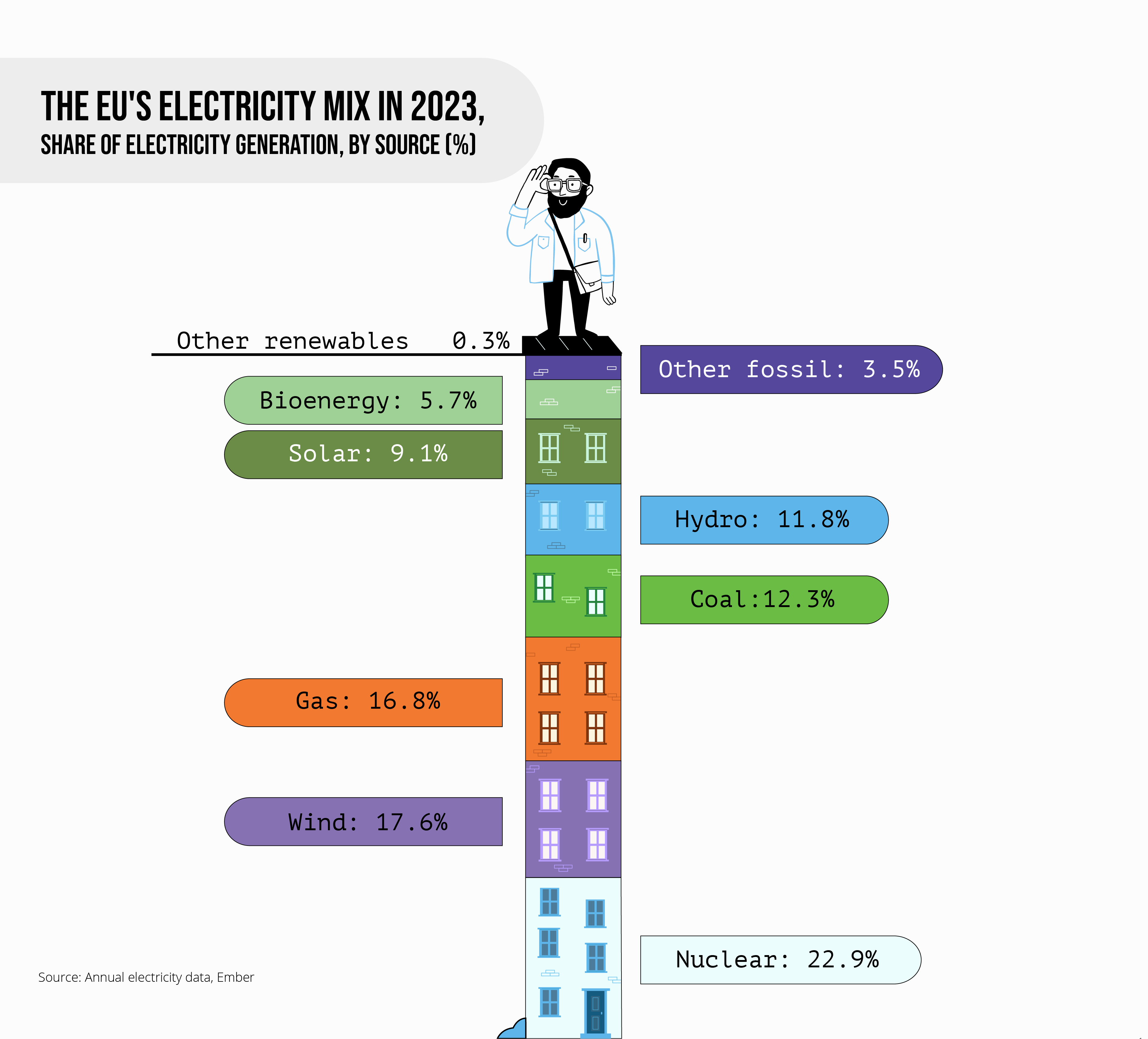
In its 2023 analysis of the EU electricity sector, global energy think tank Ember confirmed that wind, hydro and solar have become the most prominent energy sources, ahead of bioenergy and others.
STATISTIC 2
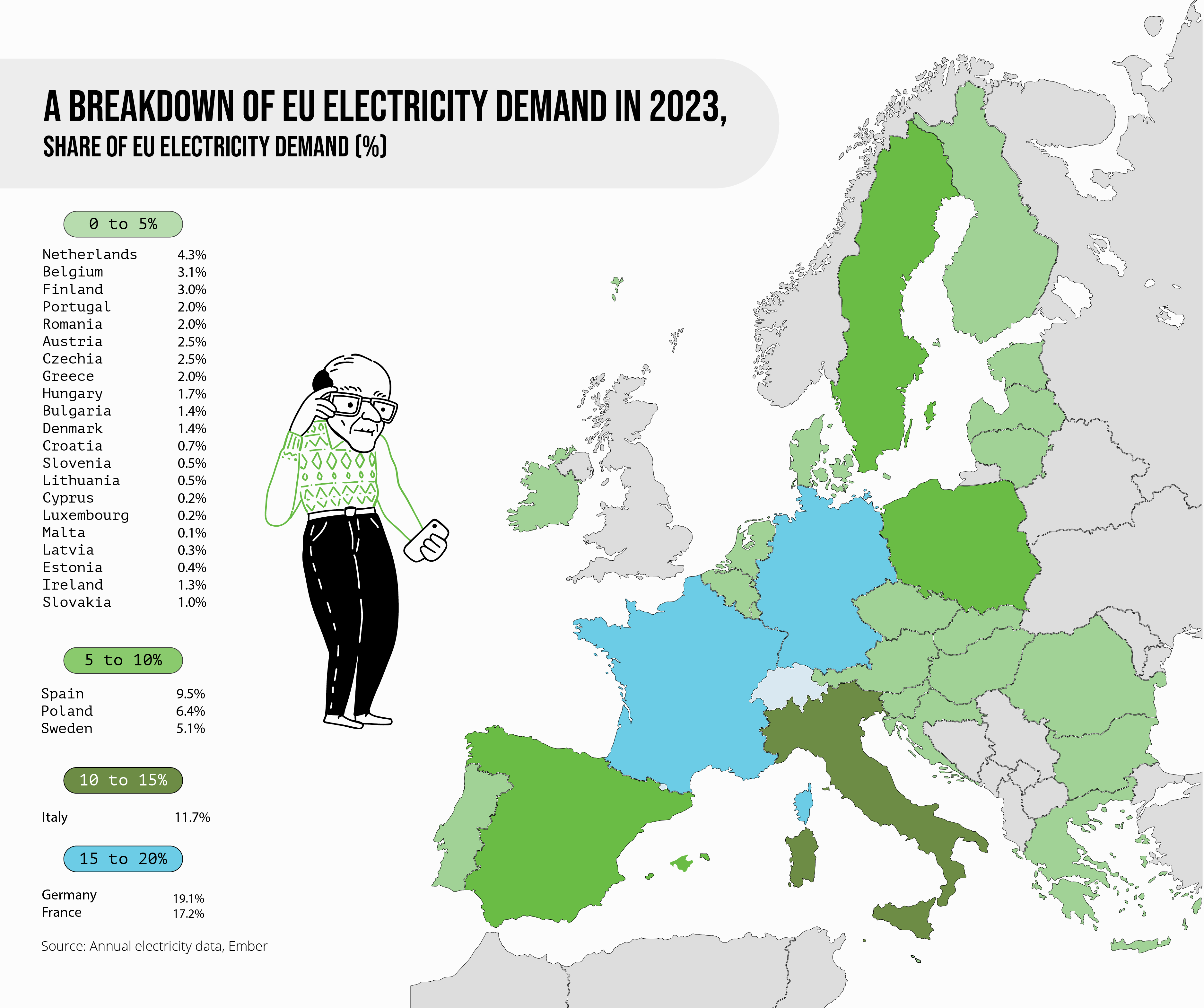
The bloc’s four largest economies – Germany (19 per cent), France (17 per cent), Italy (12 per cent) and Spain (9.5 per cent) – together accounted for 58 per cent of electricity demand, Ember noted.
STATISTIC 3
On a per capita basis, Finland and Sweden led the top ten consumers, a trend attributed to colder climates, high levels of development and greater electrification.
STATISTIC 4

Less is more
Since 2005, the EU has made greater progress in cutting primary energy consumption than final energy use, thanks to renewables uptake, energy-efficient technologies, shifts away from energy-intensive industries, and warmer winters linked to climate change.
Data from the European Environment Agency show most member states reduced energy use between 2005 and 2023. Greece recorded the steepest decline in both primary and final energy use, while Poland and Malta saw increases.
Between 2022 and 2023, Bulgaria and Estonia posted the largest drops in primary energy consumption, with Slovenia and Austria leading reductions in final energy use.
STATISTIC 5

Reducing energy consumption not only lowers emissions and pollution but also improves public health and reduces the bloc’s dependence on energy imports.
The EU has set binding energy consumption targets for 2030: 992.5 million tonnes of oil equivalent for primary energy, and 763 million tonnes for final energy.
Although long-term projections suggest the bloc is not yet on track, the consistent reductions over the past three years are encouraging.
Energy poverty deepens
In 2023, transport accounted for the largest share of final energy use (32 per cent), followed by households and industry. While household and industrial consumption has generally declined, transport usage remains volatile.
STATISTIC 6

Despite its falling share, the household sector continues to reflect stark inequality. In 2023, the number of Europeans unable to adequately heat their homes reached its highest level since 2021 – a troubling signal of rising energy poverty.
STATISTIC 7

Eurostat data for 2024 show that 32 per cent of households in Greece reported being in arrears on utility bills due to financial difficulties, well above the EU average of 6.9 per cent. The Netherlands recorded the lowest share at 1.9 per cent.
STATISTIC 8

The “high share of energy expenditure in income” (2M) – which flags households spending over twice the median share of income on energy – also reveals uneven levels of hardship.
While countries like Estonia and Hungary report figures slightly above 10 per cent, Greece stands out again with a rate exceeding 28 per cent. The EU average is 8.2 per cent.
These disparities expose the disproportionate burden placed on low-income households, particularly homeowners, and highlight the need for targeted policy interventions sensitive to national contexts and price dynamics.
STATISTIC 9

Poor housing conditions further compound the issue. In 2023, 15.5 per cent of the EU population lived in homes affected by structural problems such as leaking roofs or damp walls – the highest rates were found in Cyprus (31.6 per cent), Portugal (29 per cent), and Spain (23 per cent), compared to just 4.8 per cent in Sweden.
STATISTIC 10

Towards a fairer future
As EU energy policies evolve, fairness and equity are gaining prominence. In a recent ECPR article, researcher Morgiane Noel highlights reforms aimed at addressing energy poverty through legislative and financial mechanisms.
Updates to the Energy Efficiency Directive mandate that a proportion of energy savings must directly benefit low-income households. These changes are expected to enhance data collection, target building renovations, and deliver financial support for energy efficiency improvements.
Meanwhile, the Social Climate Fund, launched in 2021, is designed to offer direct financial assistance – such as bill subsidies – and promote green jobs for workers transitioning from fossil fuel sectors.
But the expert warns that without a cohesive EU strategy, these efforts risk falling short. This means greater coordination, increased investment, and support for innovative initiatives such as community energy projects, smart grid technologies, and new financing instruments.
Ensuring universal access to clean, affordable energy is not only a matter of policy – it is a question of justice. If implemented effectively, current measures could significantly reduce poverty and inequality while putting Europe firmly on the path to a greener, fairer energy future.
[Edited By Brian Maguire | Euractiv's Advocacy Lab ]
Updated: 01-07-2025