euractiv.de
 euractiv.fr
 euractiv.es
 euractiv.it
 euractiv.pl
 euractiv.cz
 euractiv.gr
 euractiv.ro
 euractiv.sk

Produced with financial support from an organization or individual, yet not approved by the underwriter before or after publication.
This article is part of our special report 50 Years of EU-China Relations: the future of the strategic partnership.
Less than a month before a critical summit marking half a century of diplomatic relations, tensions between the European Union and China are rising once again. Whatever hopes existed for a diplomatic reset may be vanishing.
The latest move to strain the relationship is the Commission’s decision to bar Chinese manufacturers from participating in public procurement tenders for medical devices worth over €5 million.
This marks the first application of the EU’s International Procurement Instrument (IPI), designated to enforce reciprocal market access after Beijing’s public procurement markets were found to systematically exclude European firms.
EU acts unilaterally
Reacting to the decision, the China Chamber of Commerce to the EU (CCCEU) expressed “deep dissatisfaction”, denouncing what it called “unilateral and discriminatory measures” imposed by the EU.
According to the CCCEU, the IPI findings are not based on objective evidence, and EU products and suppliers do not face discriminatory treatment in China’s public procurement market, as Brussels claims.
Nevertheless, the CCCEU considers the decision a blatant act of discrimination against Chinese products and firms, urging the bloc to reverse course and restore a favourable environment for Chinese companies operating within the EU.
Beijing raises defences
China’s response has been swift.
A state media editorial condemned the Commission’s decision as politically motivated and hypocritical, accusing Brussels of misinterpreting the realities of global production and consumption.
It argues that China's manufacturing competitiveness is rooted in systemic efficiency, open market dynamics, innovation, and a skilled labour force – not in unfair subsidies.
The editorial calls for fair international cooperation and mutual respect in trade, insisting that all economies should be free to determine their own industrial development paths without external interference.
Return of the China hawk
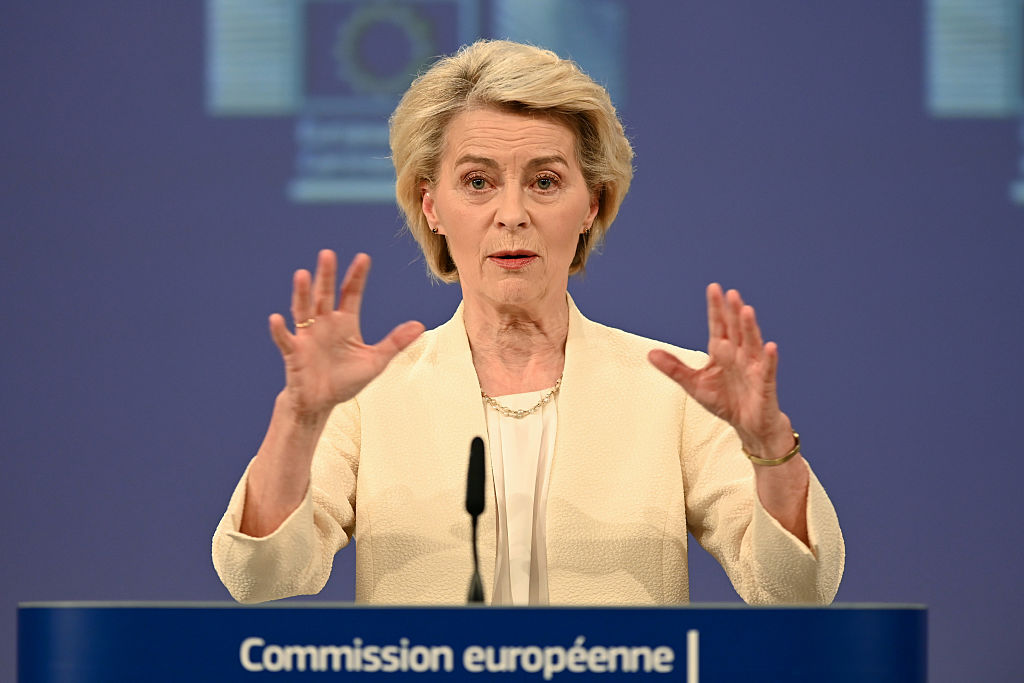
In the lead-up to the Commission's move, President Ursula von der Leyen delivered a scathing rebuke of Beijing at the G7 meeting in Canada. She accused China of attempting to “dominate” and “blackmail” the West through its export restrictions on rare earths.
Von der Leyen urged Western allies to prepare for a “decisive economic confrontation” with Beijing, framing China’s trade tactics as part of a broader strategy of coercion and unfair competition.
Though a long-standing China critic von der Leyen’s unusually forceful rhetoric – and the tone in which it was delivered – underlined the heightened urgency in Brussels.
Diplomatic reset off the table?
Caught between Washington and Beijing in a growing trade war, the EU had appeared to have compelling reasons to seek closer cooperation with China – particularly amid Donald Trump’s volatile tariff policies and his apparent disregard for EU concerns in the unfolding Iran-Israel crisis.
The year had opened with cautious optimism about a potential diplomatic reset, coinciding with the 50th anniversary of EU-China relations. Yet von der Leyen’s combative language may have all but undone previous efforts towards rapprochement.
Attention now shifts to Beijing, where the 24-25 July summit is expected to be dominated by the issue of rare earth elements.
EU Industrial Strategy Commissioner Stéphane Séjourné has signalled that the bloc is prepared to deploy trade defence instruments if necessary.
Chaotic and contradictory
Reflecting on the evolution of EU-China ties, Brussels commentator Shada Islam describes the current relationship as “confusing, contradictory and often chaotic”, marred by symbolic summits that mask deep-seated mistrust.
She cautions that tit-for-tat trade skirmishes and entrenched ideological divisions risk undermining meaningful cooperation. Increasing EU alignment with Washington, she argues, has left Brussels rhetorically tethered to the US, unable to forge an independent strategic identity.
Islam likens the trilateral dynamic between the EU, China, and the US to a troubled marriage.
Looking ahead to the July summit, she insists that form must give way to substance. Unless both China and the EU demonstrate a sincere commitment to addressing global challenges such as climate change, economic inequality and multilateral reform, high-level meetings will remain hollow.
Ultimately, Islam urges Brussels and Beijing to abandon the ritualised confrontations and embrace pragmatic cooperation. Only through such a shift can they reclaim a role as genuine global leaders in a fractured world order.
[Edited By Brian Maguire | Euractiv's Advocacy Lab ]
Updated: 10-07-2025