euractiv.de
 euractiv.fr
 euractiv.es
 euractiv.it
 euractiv.pl
 euractiv.cz
 euractiv.gr
 euractiv.ro
 euractiv.sk


Produced with financial support from an organization or individual, yet not approved by the underwriter before or after publication.
This article is part of our special report Animal protection – in Europe and beyond.
Switching to a plant-based diet in Europe is a strategy increasingly called for by EU organisations such as Humane World for Animals. The need for an action plan has been emphasised, events have been held, and now, they say, it’s time for talks at an EU level.
“There's a huge amount of EU money spent on promoting the consumption of various food products, but we could also be investing a lot of money into the promotion of legumes, rather than promoting meat. Why not promote beans and peas and those kinds of foods?” asks Dr. Joanna Swabe, Senior Director of Public Affairs at Humane World for Animals.
Humane World for Animals was one of over 130 organisations that put forward a letter calling for an EU Action plan for plant-based foods, in January this year.
This emerged from the Strategic Dialogue on the Future of EU Agriculture’s acknowledgement that something has to change; the letter called for Commissioner Hansen and the European Commission to develop an ‘EU Action Plan for Plant-based Foods’ by 2026.
Earlier this month, an action plan event was held in the European Parliament, which was opened by Christophe Hanson, Commissioner for Agriculture and Food, who joined via video call. Five MEPs participated in the talks with representation from Slovakia, Finland, Italy, Germany and Denmark.
The NGOs blueprint for an EU Action Plan calls for support to be “accompanied by appropriate funding that boosts the production and consumption of plant-based foods, with a focus on organic and agroecological products”.
New business environment
Advocates say it should bring new business opportunities for farmers, cost savings, health benefits, better climate and environment support, and improve policy coherence.
“We're looking at something that would be a comprehensive food systems approach, which would look at the entire agri-food value chain, from production, processing, to retail, public procurement, to issues like consumer availability and affordability.”
“Essentially, it’s to unlock the full potential of plant-based foods and to facilitate a transition to a more plant-based diet. We are really looking at the ways in which we can build a more healthy, more sustainable, more competitive and self-sufficient, resilient food system,” said Swabe.
“Many food crops are produced, but cereals, for example, are often used in animal feed – humans should be consuming those food crops and ingredients, not animals. We need to be reducing our dependency on meat and animal products,” she added.
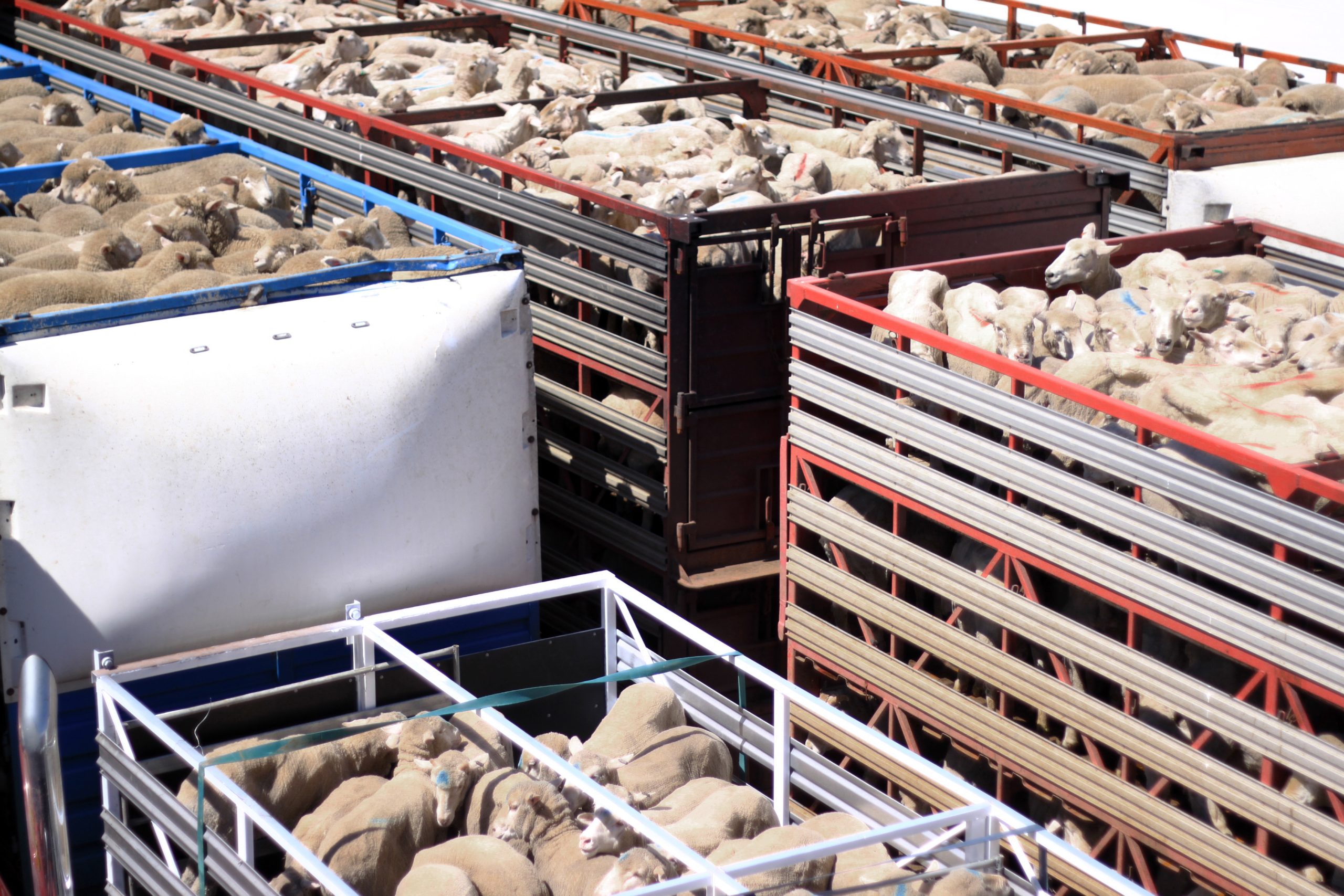
According to a research report from Leiden University and Chatham House last year, more than 80 percent of the EU’s agricultural subsidies go to the production of animals or animal feed. Activists are asking if that money could be better spent on a sustainable future for farming and EU food security.
Plant-based market opportunity
Encouraging more plant-based foods for European consumers is not a novel idea, the Danes are already a couple of years into the Danish Action Plan for Plant-based Foods.
In 2023, the Danish government vowed to support the entire value chain from farm to fork by way of grants and public funding, driving an entrepreneurship strategy and supporting health and climate forums.
Danish Agriculture Minister Jacob Jensen spoke with Euractiv ahead of the incoming Danish Presidency of the Council of the EU. He says the Danish presidency will steer clear of culture wars over fake meat and avoid a major confrontation on the bloc's next seven-year budget.
“I’m pragmatic (...) I would like to give the choice for farmers and consumers to produce and buy what they want,” he said.
“[Farmers] will produce whatever will make a buck for them,” he said, adding that he would like to see Denmark’s strategy for plant-based foods mirrored at EU level.
Supporting farmers
Any positive changes towards and plant-based diet are going to impact Europe’s farmers, which is recognised in the action plan proposals. The industry already has its struggles, so persuading change requires science-based action, something Green MEP Cristina Guarda, a farmer herself, recognises.
“One of the issues facing farmers is the lack of a fair income. So we need to fight, particularly in Europe, in the battle against undercutting pricing,” says Guarda. “And we need to also realise that farmers in this moment are recognising that the climate crisis is creating problems, not only because of drought or big weather crises, but because of the changes of temperature - we are changing the way we are doing agriculture in our places.”
She says, “We need to create a roadmap based on data that can give us a picture of the agriculture of the future, what we are going to need in the next 25 years in Europe for food security. I recognise that we are not working on data, on scientific analysis - and this is a big problem for farmer, because we need politicians that can provide this and not only answer to the groups applying the most pressure.”
Attitude adjustment
Guarda also sees the issue that asking for this type of change is being met with resilience in her home country of Italy, due to the argument that those supporting a new future in farming are being accused of abandoning the traditions and cultures of the country.
“This is a big polarisation between the two parts, and it's instrumentalised. It's used to block change and to block conversation by creating some emotional extremes. That doesn't help us to talk about this theme in a strategic way, for food security in Europe,” she explained.
“We feel that we need to make this transition work, also for farmers - we need to ask ourselves, which kind of strategy can we create politically in order to provide the credible answer to the question for farmers of what their place in this change,” she says.
The traditionalists are not the only ones trying to block such conversations.
“I think the narrative that is being driven [by the meat industry] on plant-based foods is that presents these things as ultra-processed and highly processed foods. And yes, some of the products that are placed on the market are processed, whereas there are plenty of unprocessed or minimally processed products like cans of beans or chickpeas, or tofu.”, adds Dr. Swabe.
Consumer actions
Consumer watchdog, BEUC, an umbrella group for 45 independent consumer organisations from 32 European countries, is also in full support of an EU action plan for plant-based foods. Particularly when it comes to consumer health.
“In Europe, we don't eat enough fruit and vegetables - this is our entry point, something like one in five people in Europe eat their five vegetables a day, so that is quite shocking,” explains Irina Popescu, Food Policy Officer, BEUC.
“Consumer food choices are not made in a vacuum, but they're influenced by a lot of different factors, such as marketing, advertising and price, but it could be availability, or even the physical layout of supermarkets. Looking at it from this more holistic view, we see that it's actually quite difficult for consumers today to choose a more sustainable, healthy product, which includes plant-based, so we see this plan also as a way to make sure that it becomes an easy choice for consumers,” said Popescu.
She suggests that one way of improving the health of Europeans is making ‘fruit, vegetables, legumes, whole grains, all of these products that we know we should consume more of’ more affordable by lowering VAT.
But the news is not all that grim when it comes to a shift in attitudes, particularly now the EU has plant-based opportunities in its sights. “I think we have a really good momentum at the moment,” she noted.
[Edited By Brian Maguire | Euractiv's Advocacy Lab ]
Updated: 01-07-2025