euractiv.de
 euractiv.fr
 euractiv.es
 euractiv.it
 euractiv.pl
 euractiv.cz
 euractiv.gr
 euractiv.ro
 euractiv.sk


Based on factual reporting, although it Incorporates the expertise of the author/producer and may offer interpretations and conclusions.
Europe’s leaders have done everything but genuflect in front of the White House of late to placate US President Donald Trump and avert a looming trade war. It hasn't worked.
Trump’s latest threat to slap 30% tariffs on EU goods, now slated for August 1, has sent Europeans into a frenzy of appeasement, a strategy that resembles not so much realpolitik as it does a continental-scale case of Stockholm Syndrome.
For some Europeans, it could be tempting to think concessions are worth it to avoid the damage of a full-blown trade war.
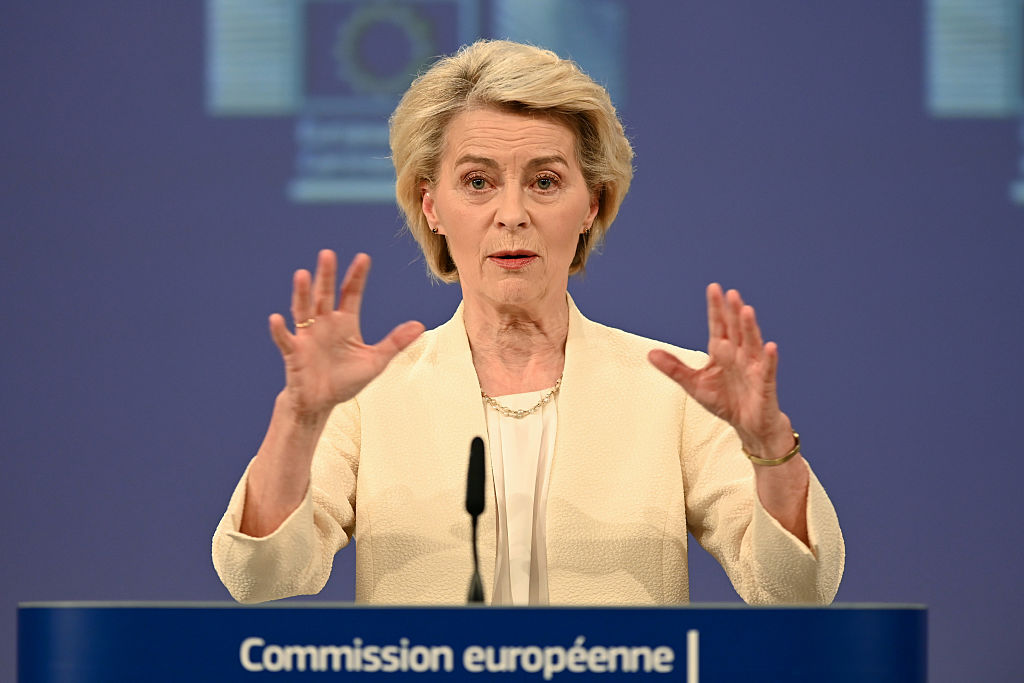
“We will take all necessary steps to safeguard EU interests,” European Commission President Ursula von der Leyen said over the weekend, insisting that the EU has "always been very clear that we prefer a negotiated solution."The European Commission drew up a list of potential countermeasures earlier this year – including duties on bourbon and Harley-Davidson's – yet these tools remain locked away amid Brussels’ hope for a last-minute deal.
Von der Leyen on Sunday decided to postpone imposing retaliatory tariffs of up to 20% on some €21 billion of US exports, originally set to take effect on Tuesday.
While most EU member states support the EU executive's stance on trade and said they will not push for retaliation before the 1 August deadline, some are also growing sceptical of von der Leyen’s wait-and-see approach, according to EU diplomats speaking amid emergency talks on Sunday.
Part of the problem is deeply differing views between EU member states, which have prevented the EU from standing up as an equal partner.
Ever since Trump took office, EU officials and leaders have struggled to secure even fleeting face time with the administration. On the rare occasions they did, outside of formal summit settings, they celebrated each encounter as though it were in itself a diplomatic triumph.
But as Trump wields tariffs as an extension of hard power rather than a mere tool of balancing his economy, Brussels looks towards a tough choice.
France has clamoured for immediate retaliation, keen to show it will not be strong-armed. Denmark learned early with Greenland that confronting Trump head-on might avert worse outcomes and it has supported a tougher line.Another bloc of countries, notably Germany and Italy, but also Poland, clings to hopes of a negotiated reprieve amid fear of further incurring Trump’s wrath and imperilling their exports.
At the EU summit in June, some of the bloc's leaders, including German Chancellor Friedrich Merz, indicated that a 'quick and simple' deal, somewhere around the 10% base tariff, wouldn't be a bad deal
Underlying the messy approach is a grim truth: after decades of transatlantic co-dependency, Europe cannot imagine life without America’s approval.
A key example came last month, when European leaders dutifully backed Trump’s demand for NATO allies to spend at least 5% of GDP on defence.
True, most European capitals - perhaps with the exception of Spain - agree that Europe rightfully must shoulder more responsibility for its own security. But many saw the move as a veiled bribe to keep Trump from pulling the tariff-trigger.
The logic was painfully transparent: indulge the man militarily to win leniency economically. The strategy held for about an hour.
While Trump hailed NATO’s spending boost as a “monumental win,” he promptly turned on Spain for daring to seek an exemption, vowing to negotiate “directly with Spain,” before presumably realising it is, inconveniently, part of the EU.
Europe's road to strategic autonomy on security remains more aspirational than practical. European NATO allies have begun private preparations for how the Western military alliance should handle a potential drawdown of US troops on the continent, despite Washington's limited indications of its plans.
Meanwhile, von der Leyen tried to curry favour by pivoting back to a more hawkish stance on China, after flip-flopping since the start of the year.
Brussels swung back in line with Trump’s confrontational approach towards Beijing, perhaps also in the hope of staying in Washington’s good books.
Europe’s once-proud digital sovereignty agenda has similarly evaporated. Instead of slapping penalties on Elon Musk’s X for its disinformation breaches and allegations of foreign influence, or advancing a long-discussed digital services tax, the EU has hesitated.
Despite these contortions, Trump remains unmoved - and the tariff threat stands.
(mk)
Updated: 15-07-2025