euractiv.de
 euractiv.fr
 euractiv.es
 euractiv.it
 euractiv.pl
 euractiv.cz
 euractiv.gr
 euractiv.ro
 euractiv.sk


Based on facts, either observed and verified directly by the reporter, or reported and verified from knowledgeable sources.
The US is urging the EU to fully adopt Washington’s more hawkish policy on China, a senior EU official said on Monday, amid growing speculation that the bloc could impose tougher measures on Beijing in order to clinch a trade deal with the US.
Leopoldo Rubinacci, a European Commission official involved in US trade negotiations, said Washington has urged Brussels to “follow us 100%” vis-à-vis Beijing, despite the EU’s insistence on forging independent ties with the world’s second-largest economy.
“When the US tells us, ‘You have to follow us 100% on what we do on China,’ we always say, 'Well, you know, we have a certain number of common interests, but we also have a very different trading and economic relationship with China than you do',” Rubinacci told the European Parliament’s Committee on International Trade.
“I don't think, as a matter of principle, that the European Union should follow examples. I think that the European Union should set its own examples,” he added.
The remarks follow EU officials’ repeated pledges to jointly tackle Chinese “overcapacities” in metal production with the US in order to avoid Donald Trump’s sweeping levies, which include a 50% duty on steel and aluminium, a 25% tariff on cars, and a 10% blanket duty that the US president threatened over the weekend to hike to 30%.
Brussels has also sought to cooperate with Washington to weaken China’s stranglehold over the global supply of critical minerals and jointly tackle growing areas of Chinese competence, such as artificial intelligence.
The UK and Vietnam are the only two countries that have clinched a trade deal with the US since Trump announced his sweeping “reciprocal tariffs” in April, which upended global trade and financial markets before being suspended one week later.
Both agreements – which fall well short of traditional trade deals – were vehemently condemned by China, which argues that Washington is seeking to cut Beijing out of global value chains.
Rapid de-risking
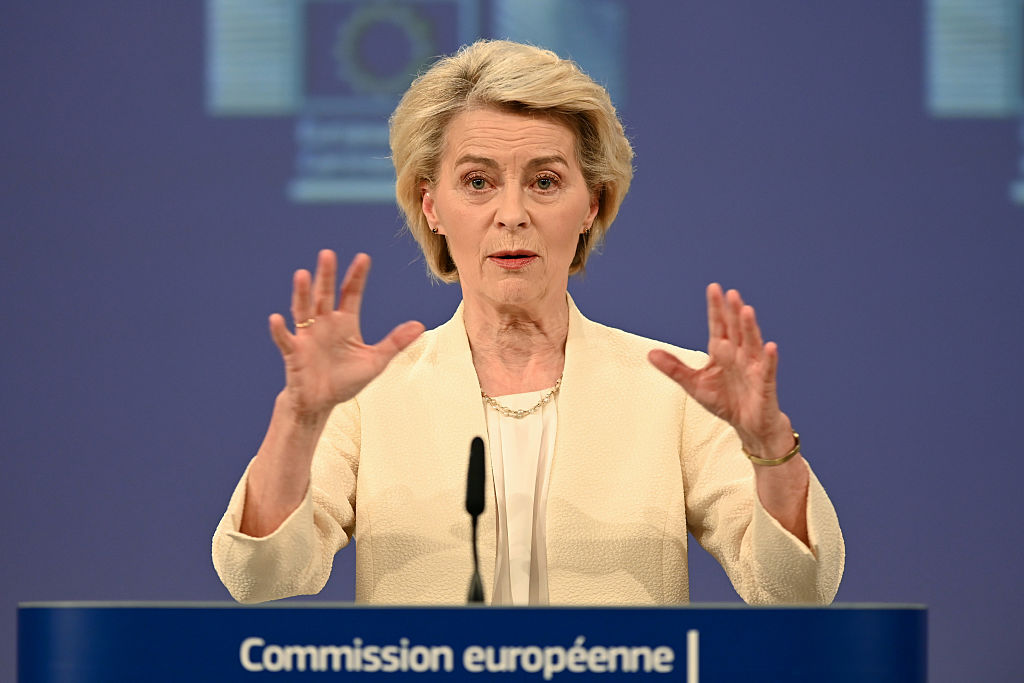
In a sign that Brussels is becoming increasingly open to Washington’s messaging, Ursula von der Leyen said last week that the EU should “speed up” its efforts to “de-risk” from China, after Beijing’s recent imposition of export controls on “rare earths” alarmed EU policymakers and forced some European manufacturers to suspend production.However, the Commission president reiterated that the EU is not seeking to “de-couple” from China, as the bloc has sought to do with Russia following the full-scale invasion of Ukraine in 2022.
Trump, by contrast, has previously accused China of “raping” the US and blasted Beijing’s “mercantilist” policies as “the greatest theft in the history of the world”.
In April, US Treasury Secretary Scott Bessent also warned that countries seeking to improve relations with Beijing would be “cutting [their] own throat” and urged the US and its allies to “approach China as a group”.
Bitter rivals?
Tensions between the US and China – which have long been fraught over the status of Taiwan, a self-governing island that Beijing views as part of its territory – soared in the aftermath of “Liberation Day” in early April, with both sides ratcheting up tariffs on each other’s goods to more than 100%.However, trade frictions eased considerably following talks between Chinese and US officials in May, when the world's largest economies agreed to slash duties on each other’s goods by 115 percentage points for 90 days.
EU trade ministers also discussed relations with China during a meeting in Brussels on Monday, which comes just weeks ahead of a much-anticipated EU-China summit in Beijing at the end of July.
Trade Commissioner Maroš Šefčovič told reporters following the meeting that the EU is still seeking to “rebalance” its trade ties with China, which ran a surplus in goods of €305 billion with the bloc last year, up from €297 billion in 2023.
Šefčovič also called on Beijing to boost market access for European firms and find a “systemic solution” to delays in rare earth exports.
He added that these issues will be discussed at this month’s summit, where von der Leyen and European Council President António Costa are expected to hold meetings with Chinese President Xi Jinping and Premier Li Qiang.