euractiv.de
 euractiv.fr
 euractiv.es
 euractiv.it
 euractiv.pl
 euractiv.cz
 euractiv.gr
 euractiv.ro
 euractiv.sk

Based on factual reporting, although it Incorporates the expertise of the author/producer and may offer interpretations and conclusions.
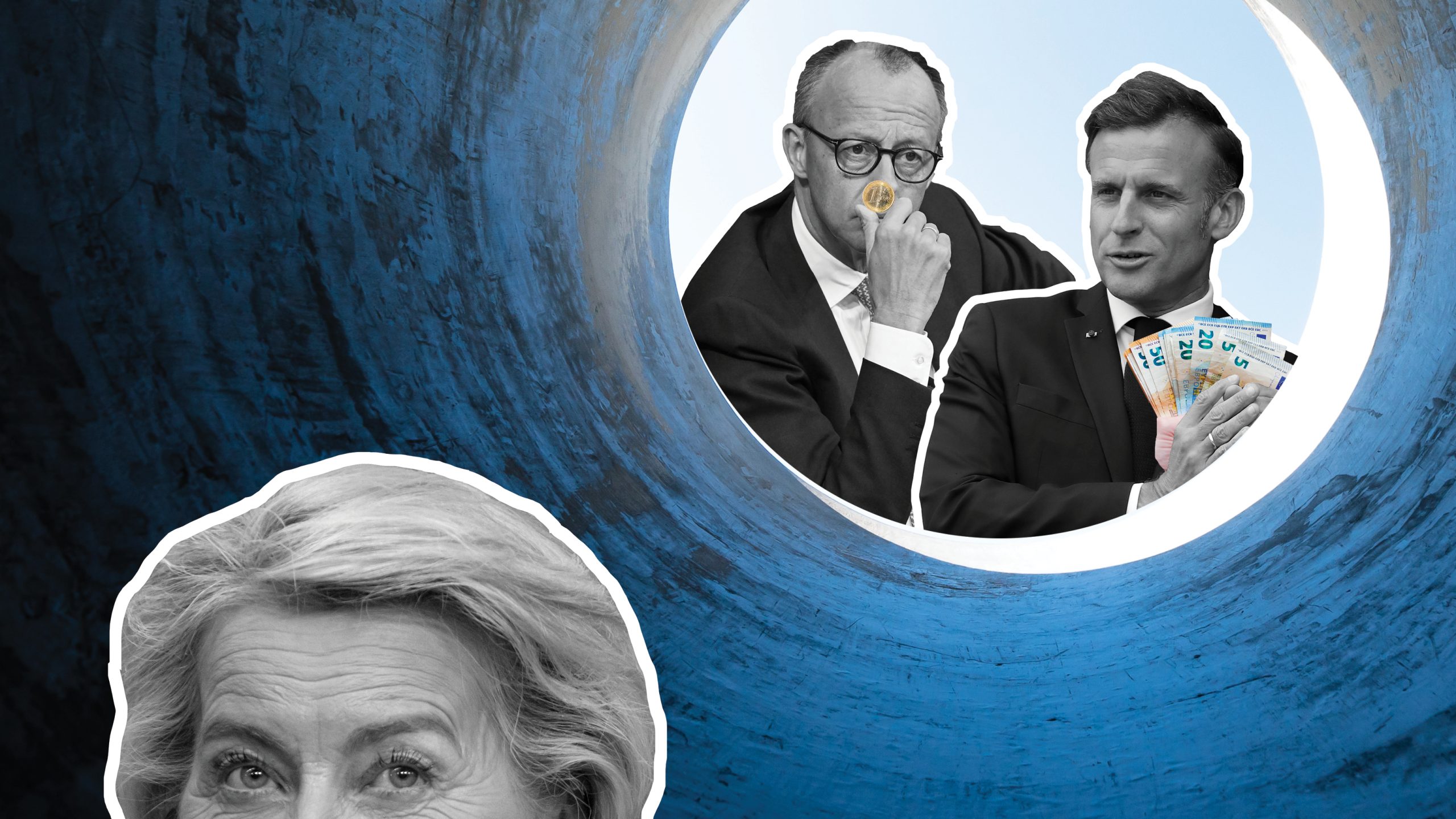
Ursula von der Leyen recently said the EU’s current long-term budget “was designed for a world that no longer exists." Analysts, however, fear her Commission's post-2027 proposal, due on Wednesday, will be similarly unfit for purpose.
The plan for the next Multiannual Financial Framework (MFF), which will run from 2028 to 2034, comes amid growing fears about the bloc’s prosperity and security, with the US-China rivalry, Russia’s military threat, and climate change all threatening to exacerbate major economic challenges, including low productivity, weak demand, and high energy prices.
Brussels has said it will attempt to address these issues by, among other things, “simplifying” the next MFF to make it easier for firms to apply for EU funds and making the budget more “efficient” to free up more money for new strategic priorities, like defence.
While analysts broadly support these measures, many argue that a radical increase in the MFF’s size is also necessary to address Europe’s investment needs and soften the impact of today’s geopolitical volatility and enormous economic uncertainty.
However, they also warn that the Commission, aware that the budget’s size is the most politically explosive of multiple highly combustible MFF-related issues, is unlikely to propose a radical increase from the current total of €1.2 trillion, or just over 1% of the bloc’s annual gross national income (GNI). The US, by comparison, spends around 23% of its GNI at the federal level.
“The Commission doesn't want to come up with a proposal that will be immediately dismissed,” said Zsolt Darvas, a senior fellow at Bruegel, a Brussels-based think-tank. “So they might propose a slight increase, but certainly not what is needed.”
In a recent analysis, Darvas and his colleagues estimated that, to plug the €800 billion investment gap identified by former European Central Bank President Mario Draghi, the EU’s next budget should be nearly doubled to 2% of annual GNI.
Such an increase is, however, overwhelmingly unlikely. Germany, the EU’s biggest economy, has already ruled out higher contributions, while other large economies like France, Italy, and Spain are fiscally constrained by their own high national deficits.
Moreover, attempts to bolster the budget through new “own resources”, or special EU revenue streams, are unlikely to raise significant amounts of money and are also likely to be opposed by EU countries wary of ceding additional power to Brussels.
“The new budget should be 0.9% of GNI higher than the current budget,” Darvas said. “This is desirable, but I’m afraid we won’t see it.”
Roughly 0.1 percentage point of this increase, Darvas noted, is necessary to pay back the €650 billion NextGenerationEU pandemic recovery programme – a one-off scheme to turbocharge the bloc’s post-COVID-19 economy, financed through common EU debt.
Repayments of the fund’s principal and interest are set to begin in 2028 and are expected to account for 20% of the next MFF’s annual budget expenditure, or €25-30 billion.
The repayment means that an effective EU budget decrease is a scenario “we are quite acutely facing”, said Philipp Lausberg, a senior analyst at the European Policy Centre (EPC), another Brussels-based think-tank.
“Europe needs the financial capacity to be able to compete with the strategic investment power of the US and China,” said Lausberg. “And for this, you need a bigger budget, but I’m afraid this won’t happen.”
Spending better – together
Analysts, however, suggested that even without a significant increase in the MFF’s size, the budget’s myriad programmes can still be restructured and streamlined to effectively boost strategic investments in green, digital, and other technologies.“It makes sense to spend a lot more together,” said Lucas Guttenberg, director of the Europe’s Future programme at Bertelsmann Stiftung, a foundation based in Germany. “But I don't think we now do that very well. I think we could do a lot better with the 1% we have.”
Currently, the MFF is split into three roughly equal portions, in which €387 billion is devoted to agriculture (the so-called Common Agricultural Policy or CAP), €392 billion to regional development (Cohesion Policy), and the remaining third to everything else.
Former US President Joe Biden’s adage about budgets – “Don't tell me what you value; show me your budget, and I'll tell you what you value” – suggests that the EU’s current priorities are seriously awry, Guttenberg said.
“If you look at the budget at the moment, one-third is for farmers, one-third is for regions, and one-third is for the rest,” Guttenberg added. “I don't think that's an accurate reflection of the EU’s priorities.”
On Wednesday, the Commission is expected to propose an alternative 'three pillar' scheme in which CAP and Cohesion funds are merged into country-specific “national and regional partnerships," according to a draft regulation obtained by Euractiv. Under the proposal, payouts would be linked to national reforms and adherence to the rule of law.
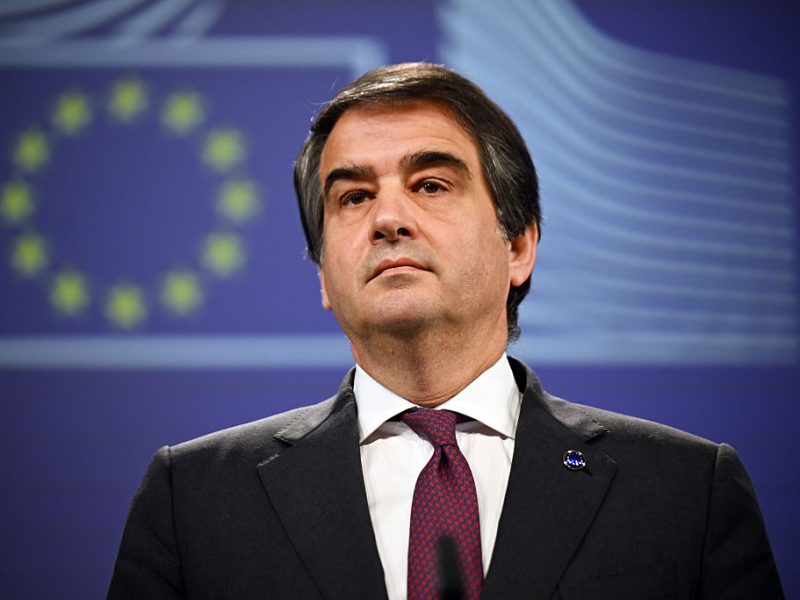
Brussels is also expected to announce the creation of a European Competitiveness Fund to boost strategic investments, as well as a Global Fund for Europe combining migration, enlargement, support for Ukraine, and other foreign policy initiatives.
Lausberg, the author of a recent study on how the next MFF could help meet the EU’s investment needs, said the Competitiveness Fund will be especially critical to boosting financing for 'European public goods' such as cross-border digital and green infrastructure, the scale-up of breakthrough innovation, and defence.
To have a “real impact”, however, Lausberg noted that the Competitiveness Fund should be “a minimum of” €300 billion – an amount that likely won’t be attained unless the overall budget is increased or CAP or cohesion funding is significantly downsized.
“If you don’t have a sufficiently big Competitiveness Fund, the money is easily diluted among different priorities, and you will not have the ‘de-risking’ intensity to crowd in enough additional private and public long-term investment into the riskier fields that really matter,” he said.
‘Major risks’
Analysts, however, warned that radically reforming or downsizing CAP will be fiercely resisted by France, the largest recipient of EU agricultural funding, during the next two years of budget negotiations.
Any attempt to radically redesign or cut regional spending will, similarly, likely be blocked by Poland and other large beneficiaries of cohesion funds, they added.
Moreover, Brussels’ push to link EU payouts to the rule of law and entrench long-term support for Ukraine will be vehemently opposed by Hungary, whose leader, Viktor Orbán, has long clashed with the Brussels bureaucracy and is deeply sceptical of Kyiv’s ability to fight off Russia.
“I wouldn't expect dramatic changes, because unanimity is needed for the budget to pass,” said Darvas. “There are major risks that the budget will not only not be of a sufficient size, but that it will not be adequate in terms of its composition."
(mm)