euractiv.de
 euractiv.fr
 euractiv.es
 euractiv.it
 euractiv.pl
 euractiv.cz
 euractiv.gr
 euractiv.ro
 euractiv.sk

Based on facts, either observed and verified directly by the reporter, or reported and verified from knowledgeable sources.
Regional authorities are set to lose control over billions in EU funds, as the European Commission is set to dismantle a decade-old policy that gave them a direct role in shaping how cohesion money is spent.
After receiving a third of the EU budget for decades, regional chiefs are in for a rough awakening. On Wednesday, the Commission will unveil the radical overhaul of the €300 billion-plus cohesion policy, originally designed to help poorer regions catch up.
“From behind the smoke of simplification and efficiency, a ‘Big Ugly Bill’ will emerge,” warned Kata Tüttő, the president of the EU’s regional representation body, in early July.
According to a draft law seen by Euractiv, the policy will be reshaped in four ways that “increasingly blur its fundamental principles,” Sabrina Repp, an S&D MEP from Germany who focuses on the catch-up funds, told reporters on Tuesday.
What could change
Capitals in charge. Regional authorities, currently allowed to negotiate directly with Brussels, would be de facto cut out of the decision-making process. Instead, regions would pitch projects to their respective national capital.Country-first allocations. Rather than distributing funds to the EU’s 244 regions based on how far they lag behind the bloc’s average, the catch-up funds will be assigned to countries based on their GDP average. Southern Italian regions, for example, are economically poorer than their northern counterparts, but they would receive less under the new rules because of Italy’s overall GDP.
New strategic priorities. An April review of the catch-up funds, which had hardly been spent up to that point, introduced a host of new priorities: defence, affordable housing, water resilience, energy, and Eastern border countries and cities – all of which compete with the original goal of boosting laggard regions.
Big firms over SMEs. The review also stressed the need to stop supporting just small-and medium-sized enterprises (SMEs) in lieu of bolstering larger firms. "With the cake staying the same size, big firms stand to benefit at the expense of SMEs," said a Parliament source, speaking candidly, calling the move a major shift. Big firms are more competitive, the Commission's thinking goes.
“This mid-term review marked the beginning of a fundamental restructuring of cohesion policy,” explained Repp.
A coalition of majors and cities backing the policy, gathered under the banner of the 'Cohesion Alliance' are already looking to 2026, having failed to avert the Wednesday proposal that one member described as “doomsday."
"We are mobilised to fight for a strong Cohesion Policy after 2027,” reads an email seen by Euractiv addressed to 'Cohesion advocates' all over Europe.
Cohesion policy problems
Not everyone is expected to mourn the possible dismantling of cohesion policy. The Germans, who contribute the biggest share of the EU's seven-year budget, have long considered an overhaul inevitable.
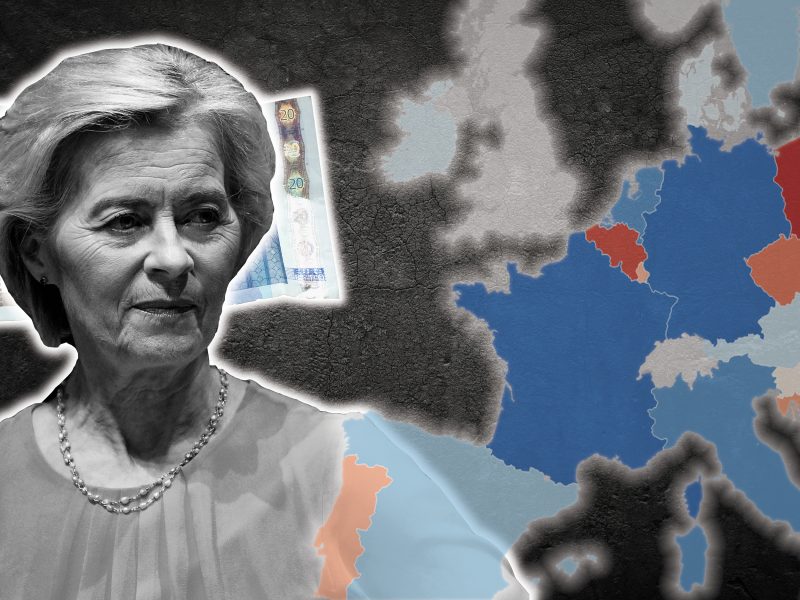
As it stands, the policy "is clearly overfunded and ineffective in many recipient regions with weak institutions, like southern Europe,” said Friedrich Heinemann, an analyst at the Centre for European Economic Research (ZEW).
For Heinemann, the very premise of the policy is flawed. “The EU's promise of catching up is primarily based on the single market,” he explained, suggesting Eastern Europe’s economic gains were driven not by cohesion transfers but by "competitive" integration into the bloc’s internal market.
A 2023 study also shows that while cohesion funds do boost growth, most of the money goes to the rich in poor regions, widening inequality gaps.
Thomas Schwab, a researcher at the Bertelsmann foundation, fears that the Commission's proposal which “focuses only on the wealthiest regions” will inevitably “weaken the core of the European idea.”
“What is currently being presented as ‘flexibilisation’ often means in practice a watering down and thus a weakening of this essential pillar of the EU.”
(mm)